Blog / Karting Sponsorship Deck: What Goes on Each Slide
Karting Sponsorship Deck: What Goes on Each Slide
October 18, 2026 · RacrHub
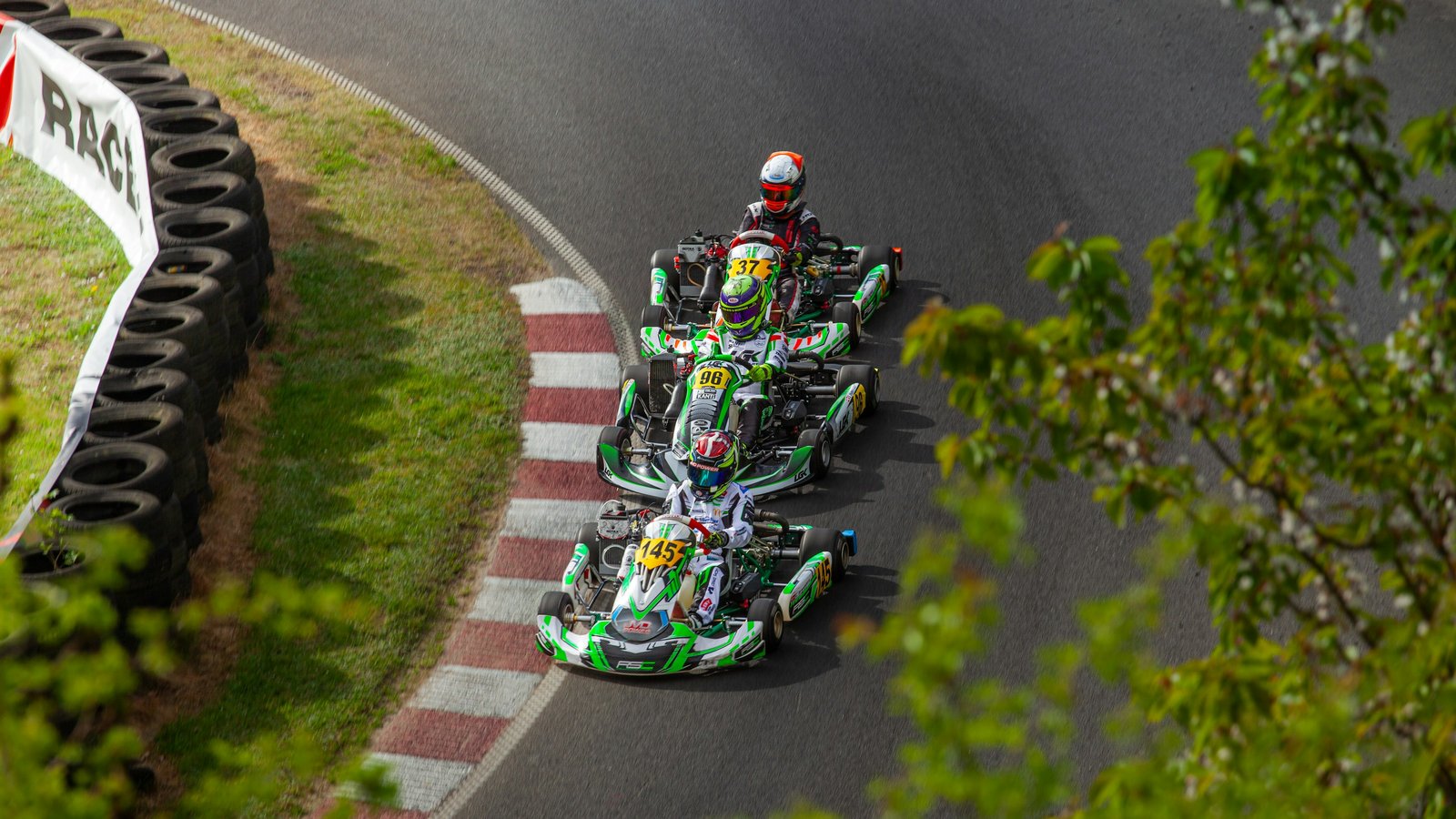
The first sponsorship proposal Olivier Olthof sent was eleven pages long. Nine of those pages were about the kart, the engine, the tyres and the championship format. Two were about him. None were about the company he sent it to. "It got, predictably, no reply." He has rewritten that document every season since, from national karting into cars. In his 24 June 2026 article on DriversPerformance, the company he founded, the working version is six pages: a cover and five pages of content.
A karting sponsorship deck is a short business proposal for the company reading it. DriverBio, a karting profile platform whose homepage says it is now in early access, says 8 to 12 useful slides are enough for most drivers and teams. Olthof calls lap times context for what the company gets back.
Most of this reporting comes from karting, and most of the sources are European. A U.S. drag-racing guide and a Florida design studio are the American pages in the set.
Before anyone sees it
Cold contacts get a one-pager from Olthof, kept under 200 words of actual text. The full proposal comes out once someone has shown interest.
Megan Meyer, a former professional NHRA Top Alcohol Dragster driver with two World Championships, wrote Sponsorship Acquisition 101 for Women in Motorsports North America in 2024. The discovery meeting is around 30 minutes, or longer if you are getting a tour. Bring a notebook and nothing else. "This means you shouldn’t bring your deck!" Ask about their target market, any new products or campaigns, and how sales and distribution are set up. Book the follow-up before you leave, and pitch from those answers.
The fiscal check sits earlier, in her research phase. Learn the ownership structure, the fiscal year, and when the company finalises its sponsorship budget. "If you pitch to them outside of the window of determining their sponsorees, then your chances of being remembered are slim." Use that time, she says, on the relationship and their marketing goals.
Motorsport UK, a sanctioning body, says on its Funding Your Future page to research what the company is striving to achieve. Our guide to getting racing sponsors covers the one-pager and the first visit. Bring the deck to the meeting you book at the end of that visit.
Slide by slide
The cover carries your name, your class and championship, the season, a way to reach you, and one strong photo. DriverBio's plain-title example puts the year first and calls the file a karting partnership proposal, set against a vague personal-journey headline. Meyer puts the sponsor's logo on that cover.
The next page is you, and Olthof keeps it to one page. Name, age, class and series, your championship position or last season's result, one sentence on where you are heading, and a photo where your face is visible. "Companies sponsor people, not equipment." DriverBio treats a national podium, a strong club result and a personal best as different achievements. Meyer would put a long history behind a QR code near the front, opening a sizzle reel or a one-page racing resume.
On the programme, DriverBio says to name the championship, the rounds and the tracks, and mark what is confirmed against what is still provisional. A confirmed championship calendar is stronger than a list of possible events. If you print attendance, use a figure the organiser supplied, and name that source and the season. "Do not present a circuit's total annual attendance as if every person saw your kart."
Keep your own channels separate from the paddock and from the championship. DriverBio treats followers as a media asset you can account for. The paddock is the event. The championship's total social following is not yours to sell. Pull the figures from the platforms and print the period, the previous 90 days or the current season. A regional accountancy firm cares that 60 percent of the audience lives within 50 kilometres. A helmet or energy drink brand cares that the audience is 16 to 34.
Show where the logo sits. DriverBio's kart list runs through side pods, nose cone, number panel or rear bumper, the suit and helmet, and the trailer and gazebo. Class regulations or organiser approval can block a placement, and championship-wide signage is out if the kart is all you control. Meyer saves exact sizes for the proposal after the deck, a business plan with no pictures: car, truck, trailer, uniforms, helmet, banners. On the deck, Olthof mocks their logo onto a photo of the kart or car. Ten minutes in any design tool, he says. Motorsport UK says: "Sponsors will need a clear return on investment (ROI) and that does not come by putting a sticker on a car."
Olthof's activation page is the one he singles out: "This is the page that separates you from every other driver asking for money, and almost nobody includes it." Ideas that have worked for him and for drivers around him include a karting day for the sponsor's staff or best clients, with you setting up the karts and doing coaching, the kart or car on display at their trade fair stand or a showroom opening, a content day featuring their product for their channels, and a discount code for your followers if they sell direct to consumers. Write three that fit that industry.
The packages slide, where the advice splits
Olthof prices three to five tiers in euros, and every deliverable has to be something you can count. His sample ladder is a national karting programme with a season budget around €45,000. Supporter is €750: logo on the kart, a mention in every results post, an invite to one race weekend. Bronze is €1,500, Silver €3,500, Gold €7,500. Title partner is €15,000.
The bottom tier has to be low enough that a local owner can say yes without a board meeting, under €1,000 in most countries. The top tier should be 10 to 25 percent of the season budget. When a sponsor pushes back, add deliverables and leave the number. Never publish a price you would not accept. If €750 does not cover the sticker, the invites and your time, he says that tier is set wrong.
Meyer tells racers to drop gold, silver and bronze. Shown those tiers, she writes, a company is more likely to take the one that covers most of what it wants at the lowest price, or to take none, because the set is not what it was looking for. Hand over a menu of assets. DriverBio asks for two to four options, and for metal names only when the differences are immediately clear. Its names describe the job: event partner, season partner, technical partner, community partner.
We would put a price on the slide. Without a number, Olthof argues, the next step is another email and the owner has nothing to approve. Name each package for what it does, using those job titles, and add a custom line so the owner can build from Meyer's menu. Then check the top price against your season budget. He puts a club karting season at roughly €5,000 to €12,000 in the paddocks he knows. On a €5,000 season, 10 percent is €500 and 25 percent is €1,250. €500 also sits under the €1,000 line he wants on the cheapest tier. The €15,000 title belongs to the national sample at about €45,000.
The last two slides
Olthof sends a short report after every second round: photos with the logo clearly visible, social statistics with screenshots, press mentions, and an end-of-season summary. "The person who signs your deal usually has to justify it to their own boss in January." His renewal rate jumped the year he started sending those reports without being asked, with the same on-track results as the season before.
End the deck on the package you recommend, the amount, a deadline if you have a real one, and a name, email and phone number.
Templates
Racing Mentor offers a 16-page proposal template for £58 including VAT, as a PDF and an editable PowerPoint, plus a 15-page guidance document. Grand Prix Studio, the Daytona Beach studio owned by Samuel Pawlak, prices a Google Slides deck at $49, with over 30 slide layouts taken from decks it built for clients. The product page says: "graphics don't sell sponsorship, clear communication and well thought out marketing plans sell sponsorship."
Meyer's guide closes on a bundle. The proposal template in it is an editable eight pages, listed at $75. She points drivers to Canva's hundreds of free pitch-deck templates, sent as a view link, because a full PDF can be too large for an email. "I also highly recommend not using ChatGPT to write the text for your deck; instead use ChatGPT or any other AI tool to brainstorm ideas."
On a RacrHub profile you can show your schedule, your results and your standings, and organise sponsors by tier, each with a logo, a link and the deliverables. The free plan holds up to five partners, includes a contact form, and shows who visited in the last seven days. Starter is $5 a month, with 15 partner slots and 30 days of analytics.
Olthof starts with the audience page, because honest numbers take the longest to gather. Open your Instagram insights and write down the period, the previous 90 days or the current season. If an attendance figure came from the organiser, put that name and the season beside it. Take a notebook to the first meeting.
FAQ
What should a karting sponsorship deck include?
A business owner should be able to see who you reach, what you deliver, the cost and the next step without speaking to you first. A junior driver should name the parent or guardian who handles commercial contact and approvals.
How many slides should a sponsorship deck have?
Six pages in Olthof's working proposal, or five to seven including the cover in his FAQ. DriverBio's figure for most drivers and teams is 8 to 12 useful slides. Cut a page that is not about the sponsor's return.
Should I put prices in my sponsorship deck?
Yes. Publish a figure you would accept, with a bottom tier a local owner can approve. Meyer wants the company to assemble the assets. Check a title against 10 to 25 percent of the season budget.
Should I send my deck in the first email?
No. Cold contact gets the one-pager. Meyer keeps the first email short and asks for a meeting. The deck comes at the follow-up, once you know whether you are inside their budget window.
Do I need to pay for a sponsorship deck template?
No. Meyer points drivers to Canva's free pitch-deck templates. A paid file is a layout. You still write the activation and the prices for that company.
Put the story where sponsors can find it
A profile keeps your bio, partners, schedule, and results on one link you can drop into the email or deck.
Create your profileBrowse driver resources